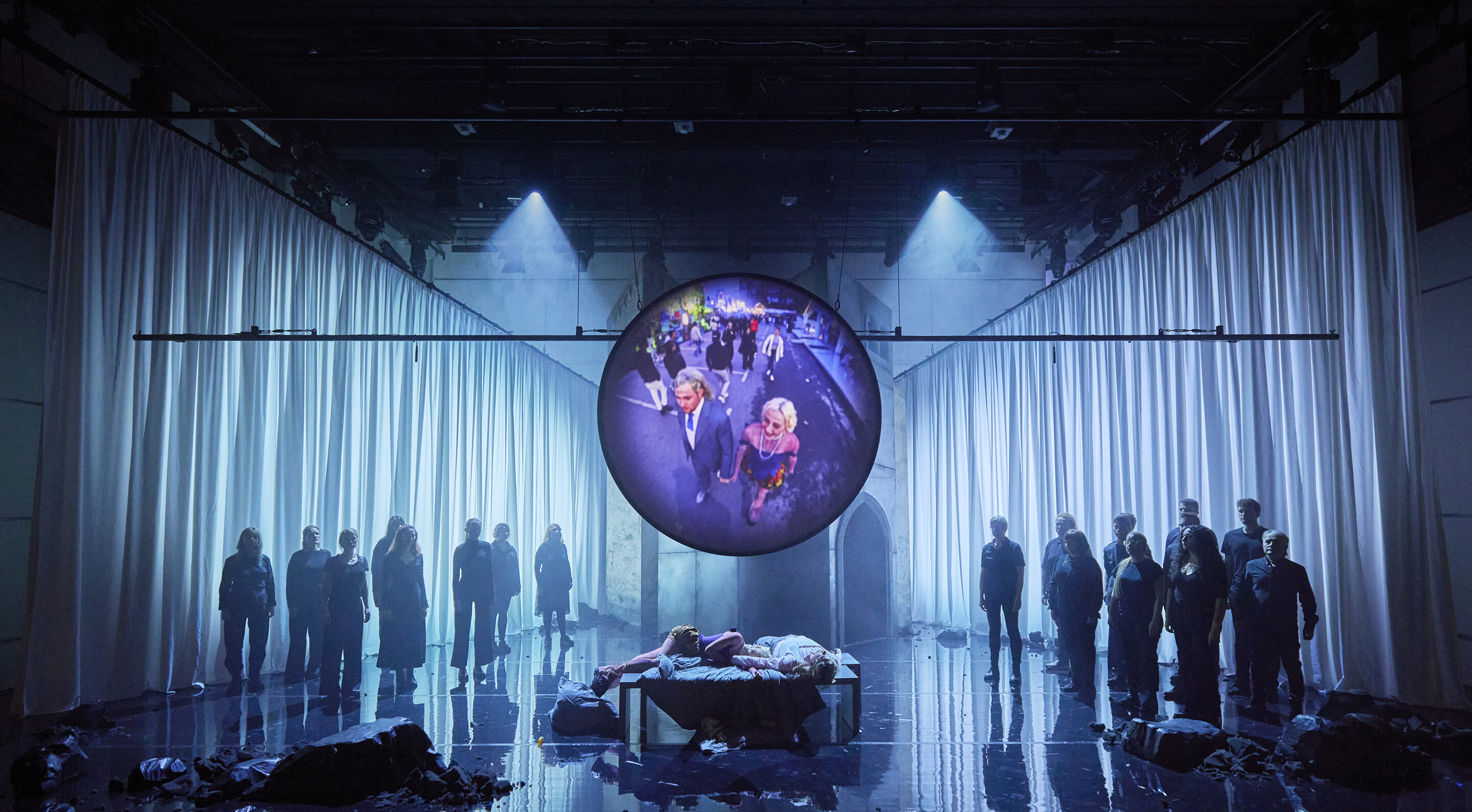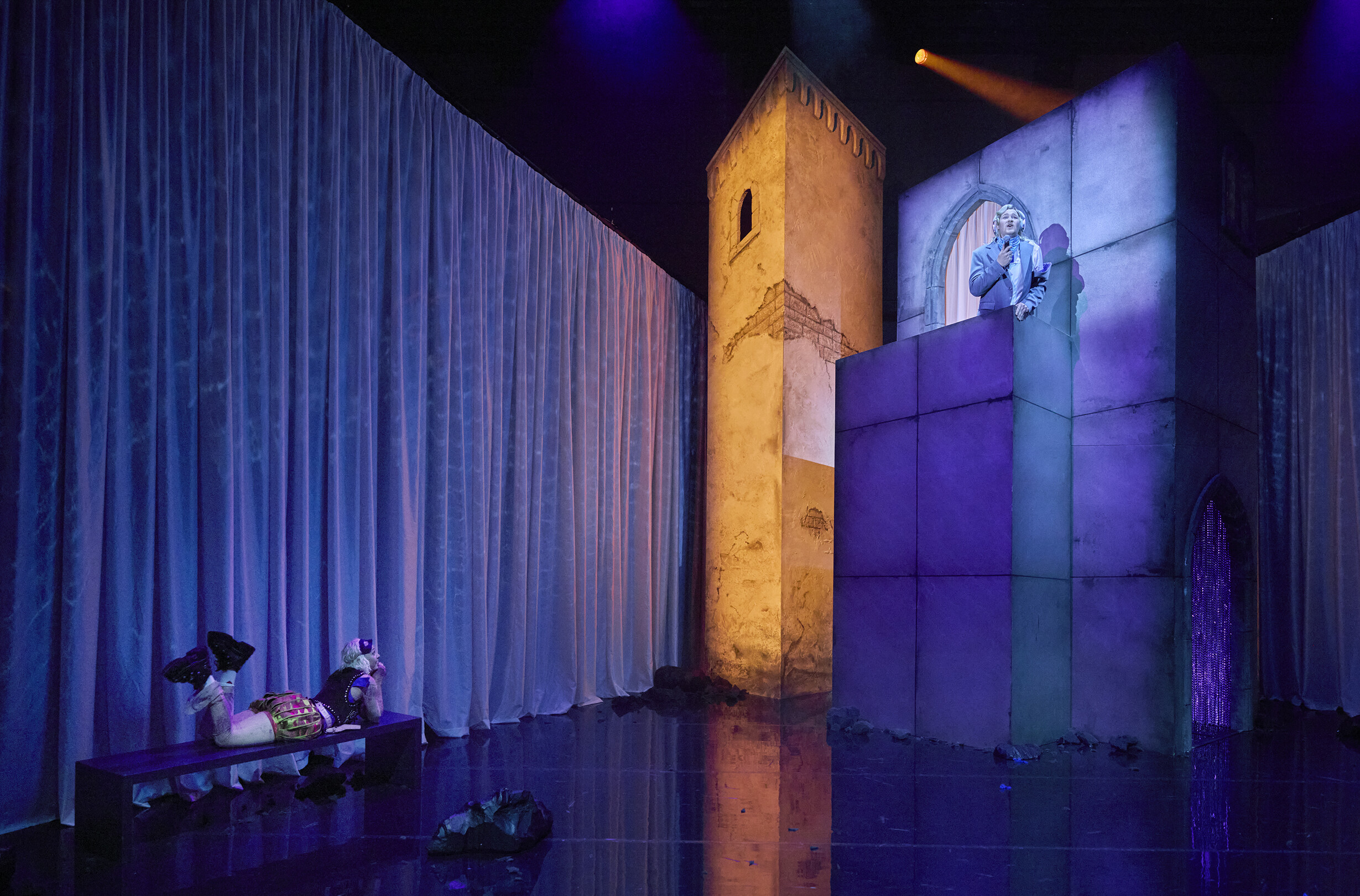


















Romeo and Juliet
in german
from 12 years
Team
Direction: Ronny Jakubaschk
Dramaturgy: Barbara Bily
Music: Christoph Iacono
Light Design: Ingo Jooß
Cast
Geronimo Hartig (Romeo)
Linda Rohrer (Julia)
Martin Liema (Tybalt / Brother Lorenzo)
Patricia Schäfer (Wet nurse)
Loris Kubeng (Mercutio / Prince)
Zlatko Maltar (Lord Capulet)
Julia Baukus (Lady Paris)
Nils van der Horst (Benvolio)
Komparserie des Mainfranken Theaters Würzburg
The story is as simple as it is tragic: At a masquerade ball in Verona, two young people suddenly fall in love. Juliet Capulet meets Romeo Montague, who is her age, and falls deeply in love with him, a love he passionately returns. Due to the bitter feud between the Capulets and the Montagues, Juliet and Romeo’s love is doomed from the start. Despite all opposition, the two marry in secret. But their families’ thirst for revenge seems insurmountable and leads to disaster.
Romeo and Juliet, which premiered in London in 1595/96, is one of the most famous plays in the world. For centuries, the underlying question has been asked again and again: Can love withstand the ordeal of hatred and overcome boundaries?
The poet, playwright, and prose writer Thomas Brasch (1945–2001) lived in the GDR until 1976 and later in West Berlin. A recipient of numerous awards in West Germany, he also worked as a director and screenwriter in the 1980s. Brasch’s new translation of Romeo and Juliet portrays Shakespeare’s tragedy as a radical rebellion of love against all forms of authority.
Romeo and Juliet, which premiered in London in 1595/96, is one of the most famous plays in the world. For centuries, the underlying question has been asked again and again: Can love withstand the ordeal of hatred and overcome boundaries?
The poet, playwright, and prose writer Thomas Brasch (1945–2001) lived in the GDR until 1976 and later in West Berlin. A recipient of numerous awards in West Germany, he also worked as a director and screenwriter in the 1980s. Brasch’s new translation of Romeo and Juliet portrays Shakespeare’s tragedy as a radical rebellion of love against all forms of authority.